

The first issue of this series was posted earlier this month, and resulted in attracting many Primary School students into the Learning Resource Center (LRC) to read the award-winning children’s books. In this second issue, we will open the door to the world of Asian literature awards, hoping to arouse the reading enthusiasm of students from our Middle and High School divisions.
I. China
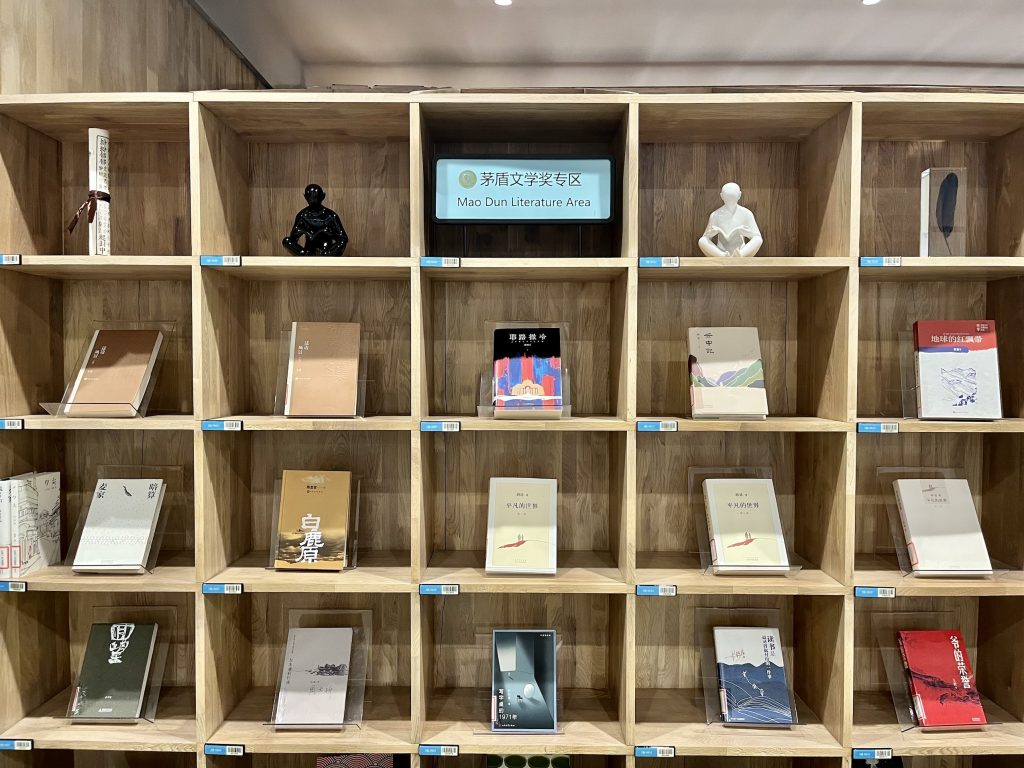
1. Mao Dun Literature Prize
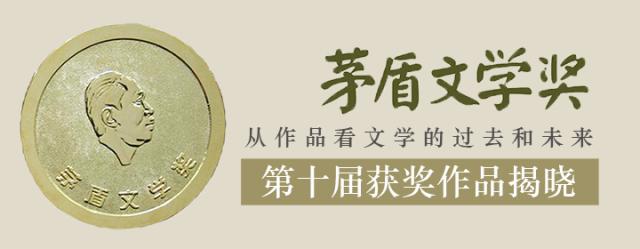


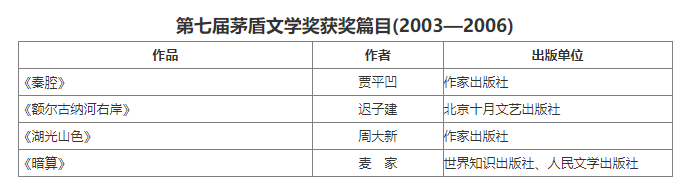
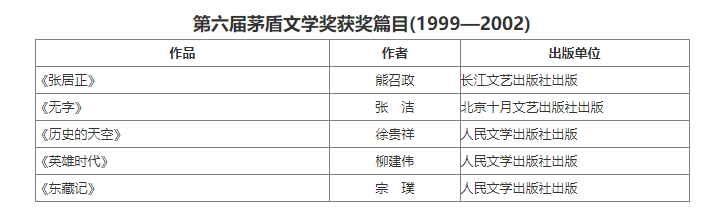
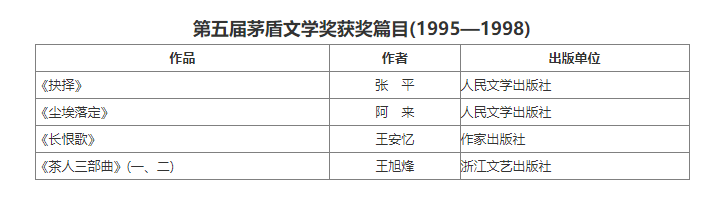
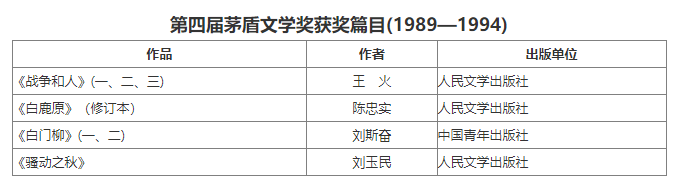
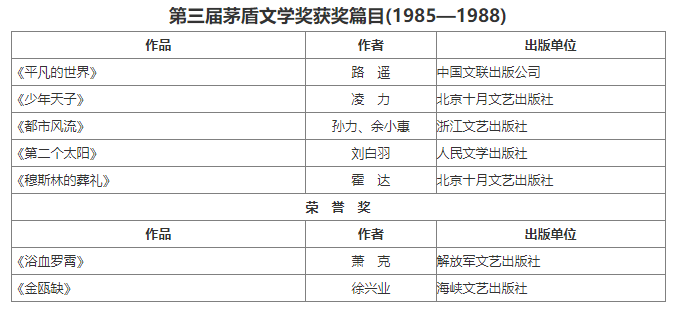
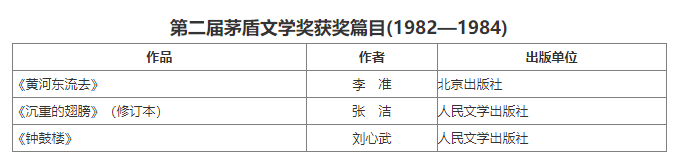
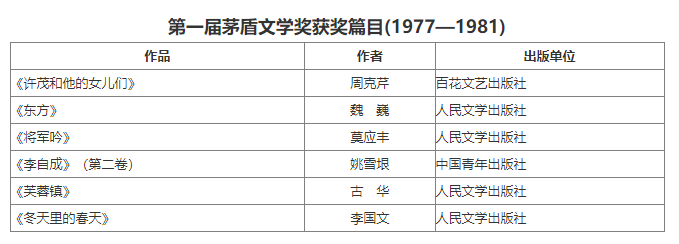
“In order to foster the creation of novels, I shall donate my manuscript fee of 250,000 yuan to the China Writers Association as a fund for setting up a literary award for novels, in order to reward the best ones every year. Since I am approaching the end of my life, I sincerely wish for the prosperity of our socialist literature!”
This was the will made by Mr. Mao Dun, a prominent Chinese writer and Chairman of the China Writers Association, on March 14, 1981, who passed away just 13 days later. In October, 1981, the China Writers Association launched the Mao Dun Literature Prize in accordance with Mao Dun’s last wish.
The Prize, which requires participating works to be full-length novels with a word count of 130,000 or more, is awarded once every four years. The Mao Dun Literature Prize has been held for ten times and 48 outstanding literary works have been awarded thus far.
There’s an exhibition area for the Mao Dun Literature Prize in the 2nd floor LRC. Some of the award-winning works and other works written by award-winning authors are on display and students will also find the latest award-winning books on the shelves soon.
2. Lu Xun Literature Prize
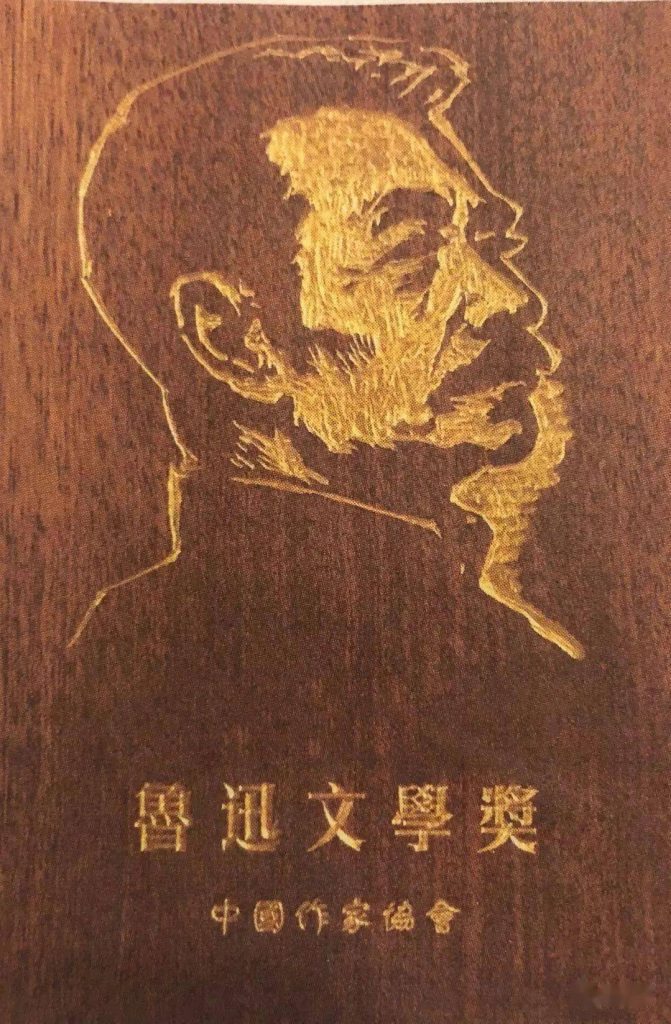

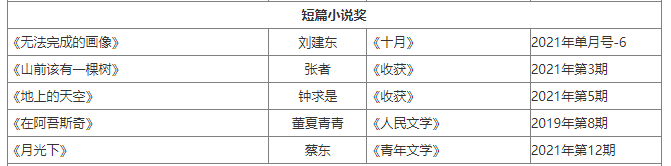
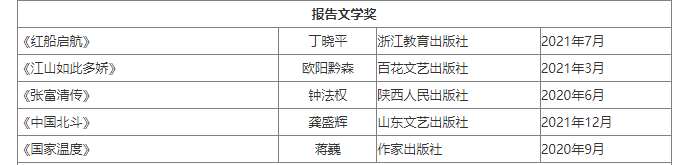
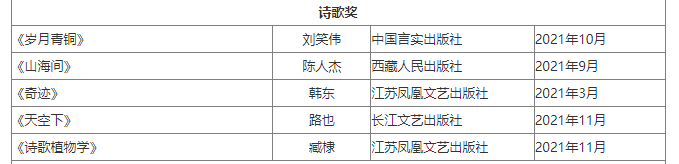
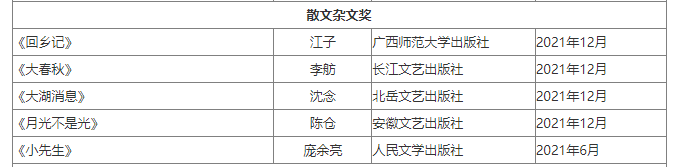
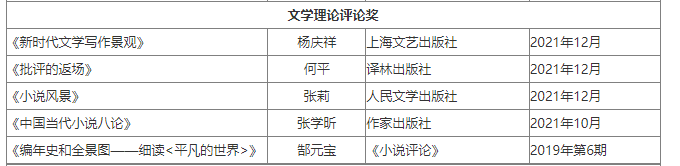
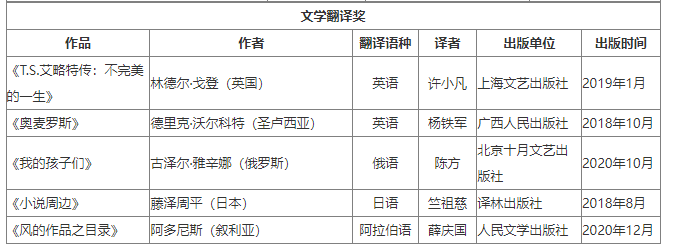
The Lu Xun Literature Prize, a literary prize named after Mr. Lu Xun, aims to reward excellent novellas, short stories, reportage, poetry, prose essays, literary reviews and literary translations as well as to promote the prosperity of Chinese literature.
The Lu Xun Literature Prize is awarded once every four years. The awards panel selects the best works of thought and art in a particular literary genre. The first award was given in 1997 and has been held seven times until now. There are 34 works winning seven awards in the 7th Lu Xun Literature Prize.
It is worth mentioning that apart from being a writer, Mr. Lu Xun was also a pioneer and advocate of modern Chinese printmaking art. The medals of the Lu Xun Literature Prize are hand-engraved by professors from the Printmaking Department of the Central Academy of Fine Arts along with their students. Therefore, each medal is also an individual work of art.
In addition to these two literary awards, there are many local or characteristic literary awards in our country, such as the “Lao She Literary Award” (which mainly rewards the works of authors from Beijing and outstanding works published in Beijing), the “Junma Literary Awards for Ethnic Minority Writers” (which encourages the creation of minority literature) and the “Cao Yu Drama Literature Awards” (a national award in the field of drama literature).
1. Naoki Sanjugo Prize(Naoki Prize for short)

At the beginning of the last century, when Japanese writer Uemura Soichi(written as”植村宗一” in Chinese characters)was 31 years old, he split the word “Uemura (植)” into Naoki (直木) as a surname, and used his age as his first name. In this way, he established the pen name “Naoki Sangyo” (“Naoki thirty-one”). He changed his name every year as his age changed. Not until he was 35 did he make “Naoki Sanjugo” (“Naoki thirty-five”)his fixed pen name.
Uemura Soichi passed away in 1934. In memory of him and his friend, the well-known writer Akutagawa Ryunosuke, two literary awards were established in 1935: the Akutagawa Prize and the Naoki Prize.
The Naoki Prize is known for its popularity, never targeting famous writers, but focusing more on new and unknown writers. The Prize is presented bi-annually, in each year’s months of February and August. Keigo Higashino’s The Devotion of Suspect X, Miyabe Miyuki’s The Reason, and Chinese-Japanese author Shunshin Chin’s Sapphire Shishi Incense Burner have all won this award before.
2.Akutagawa Ryūnosuke Prize (Akutagawa Prize for short)

The Akutagawa Prize and the Naoki Prize are “twin brothers”, so to speak. They were established at the same time and have the same frequency and timing for presenting awards. The difference is that the Naoki Prize stands for popular literature, while the Akutagawa Prize represents pure literature, given to the best works of short and medium-length novels by emerging young writers.
Famous Japanese authors such as Yasunari Kawabata, Jun’ichiro Tanizaki, Yukio Mishima, Kenzaburo Oe, and Hiromi Kawakami have all served on the panel for this award.
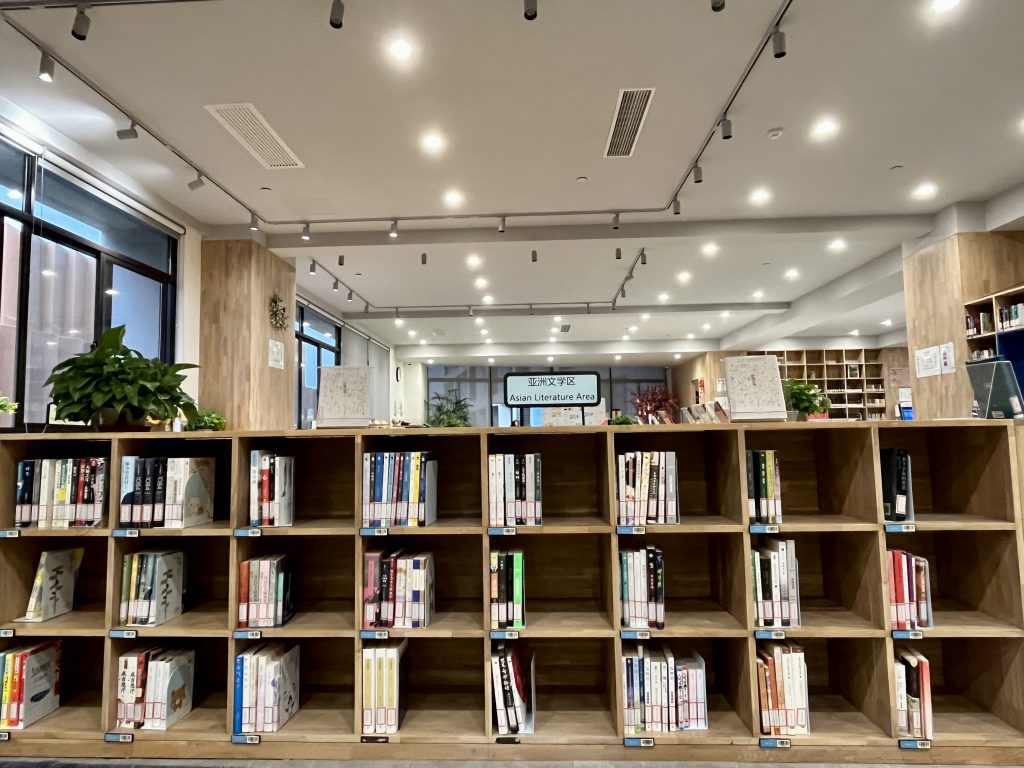
In Japan, in addition to the above two household literary awards, there are many awards for mystery novels, such as the Mystery Writers of Japan Awards, the Honkaku Mystery Awards, and the Edogawa Rampo Prize. Students interested in mystery novels can go to the Asian Literature Area of the 2nd floor LRC for further exploration.
III. Man Asian Literary Prize
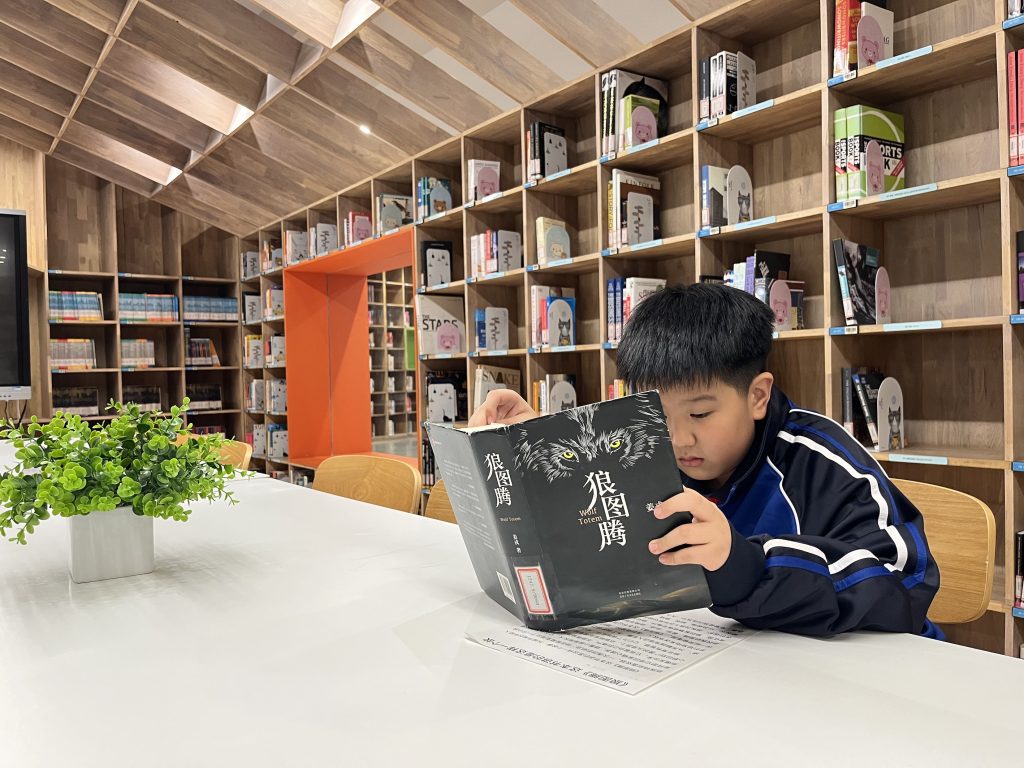
The Man Asian Literary Prize was sponsored by the Man Group. Also the title sponsor for the Man Booker Prize, the Man Group aims to increase international appreciation for and influence of Asian literature. The Prize was established in 2007 in order to honour unpublished Asian novels, either written in English or translated into English. However, new application rules were introduced in 2010, saying that only works that have been translated into English and published could apply.
In 2012, the Man Group declared that it would no longer sponsor the prize after the 2012 winner was announced in 2013, bringing an end to the prize that had been held for six years straight. Nevertheless, Chinese novels have won the prize three times during its short history, namely Jiang Rong’s Wolf Totem in 2007, Su Tong’s The Boat to Redemption in 2009 and Bi Feiyu’s Three Sisters in 2010.
http://www.chinawriter.com.cn/404087/404988/429537/index.html
https://baijiahao.baidu.com/s?id=1723450318928759971&wfr=spider&for=pc
http://www.chinawriter.com.cn/n1/2019/0816/c405645-31300293.html
https://www.sohu.com/a/255168877_174810
http://www.chinawriter.com.cn/n1/2018/0811/c405646-30223204.html
https://zhuanlan.zhihu.com/p/458965382
https://view.inews.qq.com/a/20211012A0D4M100
https://www.zupu.cn/renwu/20201016/498960.html